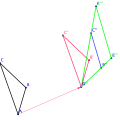
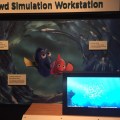
Pixar? Math? What a combination! When I wrote about what I learned at the NCTM Annual Meeting back in April, I observed that geometric transformations and mathematical models were common themes at that conference. Transformations seem fairly abstract, even if… Read More ›
Math
Temari balls
We traditionally cap off Honors Geometry by ending the course with a brief exploration of non-Euclidean geometries. In recent years we have focused on geometry on the surface of a sphere; we ask freshmen to pretend that they are living on… Read More ›
How science and math see each other
Ben does it again! We’re back to Math with Bad Drawings, with another post that resonates deeply with me as a math teacher. It begins with the somewhat startling claim that “mathematicians and scientists don’t share all that much in common.” How… Read More ›
Reactions to the NCTM Annual Meeting
Fortunately I didn’t write this report just now! (I wrote it at the end of April, right after the NCTM meeting. I never would have remembered all these details if I had waited three and a half months.) Just follow… Read More ›
Another Sunday with the Common Core
Three more perspectives on the Common Core State Standards: For all my doubts and negative reactions to the Common Core, I start feeling sympathetic to it when I read articles with headlines like “Common Core is Indoctrinating Kids with Socialism”: if right-wing… Read More ›
When Desmos fails
I have become a great fan of Desmos, a free web-based graphing calculator app. It is easy to use and remarkably powerful, providing evaluations, graphs, tables, and probably a lot of other things that I haven’t learned yet. What’s especially… Read More ›
Why?
Several of my colleagues are wearing buttons that say “Why?” — and you may well wonder why. No, they’re not disaffected teachers who are questioning authority. Au contraire, they are the authority…and they want us to help each kid understand why s/he is doing what… Read More ›
Can math skills arise from a brain injury?
“A man became a math wiz after suffering brain injuries,” claimed the Washington Post. Hard to believe, isn’t it? We all know that brain injury can have a harmful effect on one’s mathematical abilities, but how could it possibility turn someone with… Read More ›
Explore mathematics
Sam Shah is always worth reading. (I think I’ve said that before. That’s OK. It’s still true.) Back on February 12 he published a post called “Explore Mathematics” — a good title, since isn’t that what we all want our… Read More ›
“Off-track geometry”
JD2718 is always worth reading. I used to know his real name, but I’ve lost track of it. No matter; he teaches geometry, studies cryptography, and just turned 50, so we know he’s a good guy. A few months ago… Read More ›
Voynich
“A mysterious document that has bedeviled scholars and top cryptographers for more than a century,” says the Boston Globe. Is it written in code? Is it art? How old is it? Read the article for some tantalizing information — and lack of… Read More ›
The Outer Limits of Reason
Science and math can tell us everything there is to know about the universe, right? There must be people who believe that. If such people exist, they should definitely run out and read Noson Yanofsky’s new book, The Outer Limits of… Read More ›
Come to the Fair!
Come visit Weston’s Twelfth Annual Fractal Fair, which is being held on Valentine’s Day this year! That’s Friday, February 14, 10:05-12:15 in the Weston High School Library. The exhibits and presentations by 70 Honors Precalculus students (mostly juniors) will focus on… Read More ›
Suppose math tells you something that goes against your preconceived beliefs. What do you do?
Yale Law School’s Dan Kahan and three other researchers make the case that those more skilled at math are less likely to come to the correct conclusion on controversial matters—even when the numbers to support that conclusion are clear, empirical,… Read More ›
Cryptology? Cryptography? Crypto?
One of my students claimed that I was being inconsistent because I sometimes wrote cryptology, sometimes cryptography, and sometimes just crypto. What’s going on here? I suppose I could quote Walt Whitman on the subject of contradicting myself, or I could quote Emerson on the subject… Read More ›
Data visualization
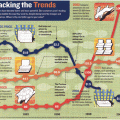
“Chartjunk?” you ask. “What’s that?” The term comes from Edward Tufte, whose work I have admired for thirty years. If you only have a small amount of time to read what he has written, I recommend the beautiful, 200 page classic, The… Read More ›
What is a proof?
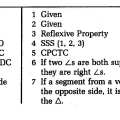
High-school math teachers and those who know them need to be concerned with what a proof is. That certainly isn’t a new claim. But for most students a proof is something you learn to construct in high-school geometry class and… Read More ›
NSA, crypto, and a long project
Back in September I wrote a long post about a recent book written by Rafe Esquith. My second paragraph began with this observation: It wasn’t clear to me at first whether this book would have anything to offer a math… Read More ›
Art or math?
What is this? Modern art? A lost work by Jackson Pollock? Actually, no. In my precalculus class this morning, we were using the Oscilloscope app on the iPad to produce real-time graphs of various musical tones. Students brought instruments into… Read More ›
Journey through Mathematics: Creative Episodes in its History
Original sources are key when studying the history of anything, including mathematics. Most readers, however, have neither the time nor the knowledge nor the access to be able to read original sources, so we rely on secondary works, such as Journey… Read More ›