“I never use pronouns,” says one Susan Sparks Smith in a Facebook post. I don’t know her, but I was sorely tempted to reply “You just did.” That’s just one example of Pronoun Trouble, the new popular linguistics book by… Read More ›
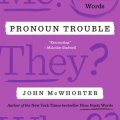
“I never use pronouns,” says one Susan Sparks Smith in a Facebook post. I don’t know her, but I was sorely tempted to reply “You just did.” That’s just one example of Pronoun Trouble, the new popular linguistics book by… Read More ›

Should we use the Runic alphabet (which we actually used to use, but that was almost a couple of millennia ago) rather than the Roman alphabet (which we currently use)? Of course we should! Let’s see why. Our Roman alphabet,… Read More ›

Time’s up! Now that 2024 is over, what do you think was the Word of the Year (WOTY)? Actually, there are many possibilities, largely because many different organizations determine their own answer to that question. But you should first ponder… Read More ›
That’s Afrikaans, Basque, Breton, Chinese (Mandarin), Croatian, Czech, Danish, Dutch, Estonian, Finnish, French, German, Greek, Icelandic, Indonesian, Irish, Italian, Japanese, Latvian, Norwegian, Polish, Portuguese, Russian, Spanish, Swedish, Ukrainian, and Welsh, of course. https://youtu.be/iygnwZoxNHw
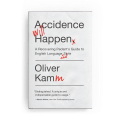
The title is a pun — but it makes sense only if you know what linguists mean by the word “accidence.” Despite that limitation, Accidence Will Happen is very much a book for the general educated reader, not for the… Read More ›
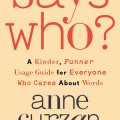
My mom would have hated this book; I loved it. My dad, as a psychiatrist, would have had some thoughts about this family disagreement — but he would have kept quiet about it. (Apparently that’s the role of a Jewish… Read More ›
I’ll talk about like nine different things, and they all come back brilliantly together, and it’s like, friends of mine that are, like, English professors, they say, “It’s the most brilliant thing I’ve ever seen.” DJT
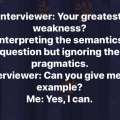
Found in the INTJ group on Facebook: Interviewer: What is your greatest weakness? Me: Interpreting the semantics of a question but ignoring the pragmatics. Interviewer: Can you give me an example? Me: Yes, I can.
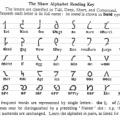
Why, you ask, would we need a better alphabet? Nothing is wrong, you say, with the one we have. We all learned it in kindergarten, after all. I suppose some other alphabets are prettier, so that might entice you; and… Read More ›
Me (in front of my geometry class) (Don’t ask): What do you call someone who speaks three languages? Several members of the class simultaneously: trilingual. Me: What do you call someone who speaks two languages? Several members of the class… Read More ›

Probably you have at least some interest in language. Probably you are not a professional linguist. If both of these describe you (having an interest in language but not being a professional linguist), then Arika Okrent’s latest book, Highly Irregular,… Read More ›

No, conlangs are not languages spoken at cons (science fiction or mystery or cosplay conventions) — although they could be spoken at some of these. Nor are they languages spoken by convicts. The portmanteau word “conlang” simply means “constructed language.”… Read More ›
To my ear, at any rate, it does not sound correct. Shouldn’t it be “to be petted”? But I’ve recently heard this use of pet as a past participle (more on that below) from at least two well-educated native speakers… Read More ›

If you enjoy the English language, but aren’t a professional linguist, you will definitely enjoy this book. If you are sometimes, often, or (yikes) always a prescriptivist, but have an open mind, you’ll not only enjoy it but will also… Read More ›

More than 90% of Americans believe that Finland is part of Scandinavia and that Finnish is consequently a Scandinavian language. Actually, I made up that “more than 90%” claim. But it wouldn’t surprise me at all if it turned out… Read More ›

Scots. No, I don’t mean the people from Scotland. I mean the language; “Scots” is a singular noun, not a plural. And yes, it is from Scotland—but it most definitely is not Gaelic. Give up? TIL that Scotland has four… Read More ›
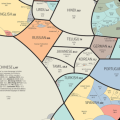
Continuing to sing the praises of the under-appreciated Helen DeWitt, I must tell you about her language-learning proposal. For a bit of context, I will first tell you about a brief conversational exchange I had with my ninth-graders at Weston… Read More ›
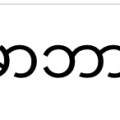
When you read this post on your device, does the title look like (as it should), or does it look like a bunch of boxes? Or maybe just like random gibberish? If your device and software are old, you might… Read More ›

“Why should there be?” you reply. (It’s always best to answer a question with a question.) Either of the two questions in the title of this post presupposes that an “r” is expected. But why? A brief (but relevant) digression:… Read More ›

Your second guess will probably be that Sardinian is a dialect of Italian spoken on the island of Sardinia, so maybe it really is related to sardines, since you suspect that Sardinia was named after the many sardines that are… Read More ›
 Learning Strategies