If you look cooly at the maps of common mispellings, paying attention to the miniscule details, it won’t take you a millenium to recognize that many of these words are frequently mispelled. The lists in those maps may or may… Read More ›

If you look cooly at the maps of common mispellings, paying attention to the miniscule details, it won’t take you a millenium to recognize that many of these words are frequently mispelled. The lists in those maps may or may… Read More ›

Even in my circles, Latin and Greek are not exactly common topics of conversation. Friends and relatives are surprised whenever I read something in Ancient Greek—or even in Latin—for fun. OK, I’m weird. But you probably knew that already. What… Read More ›
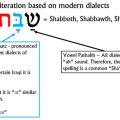
Shabbos (stress on first syllable, second vowel “o,” ends in “s”) or shabbat (stress on last syllable, second vowel “a,” ends in “t”)? Why can’t we agree on how to pronounce Hebrew? How about beth, bet, or beis? Shibboleth or… Read More ›
You do have an accent—even if you think you’re speaking unaccented English. And you do speak a dialect—even if you think you’re speaking “ standard English.” In an amazing three-part must-see video, dialect coach Erik Singer takes us through a… Read More ›
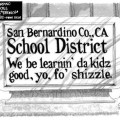
Just over a couple of decades ago, the whole country was buzzing about something called Ebonics, now known as AAVE (African-American Vernacular English). You may or may not remember this, depending on your age and ethnicity. Go watch this short… Read More ›
After the last few days, I’m sure you have observed that King Charles III’s accent is not identical to his mother’s. But to most of us they both seem to be speaking RP, the “posh” British accent that contrasts with cockney… Read More ›
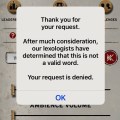
Nothing is wrong with it! Even peevers who dislike all words that are newer than 50 years old can’t object: inbox is actually 64 years old! (In the sense, of course, of the physical tray on your desk, not in… Read More ›
ə and ʌ: If you know those two symbols, can you hear the difference? (If you don’t know them, think about the English word above. It has two vowel sounds (as the third vowel letter is silent): the first is… Read More ›

You might think that the subject that we call linguistics is purely academic—in both senses of the word. But of course linguistics is also political, as is seen in all the controversies about pronouns, Ebonics, and PC language. This post,… Read More ›
All too often I hear (or read) that “there’s no word for ________________ in __________” for some particular word and some particular language. I wrote about this kind of claim three years ago. I think I need to quote that… Read More ›

My older niece is named Hannah. My younger niece is named Aviva. My older great-niece is named Eve. And now, as of last night, my younger great-niece is named Ada. Aha! Do you detect a pattern?
People keep wondering how I journeyed from linguistics to math. Maybe they’re the same thing:

How do you pronounce “Tesla”? Do you pronounce the middle consonant like a z, as the Italians do, or like an s, as it is spelled? Both pronunciations are “correct,” but how do you say it? Linguists will tell you… Read More ›
What, I wonder, draws me to the Celtic languages and Celtic lands, when I’ve never even been there and speak none of those languages? Irish, Manx, Scottish Gaelic, Welsh, Cornish…all are missing from my language repertoire. And I’ve never visited… Read More ›
“I never said half of the things I said,” remarked Yogi Berra. Or so the story goes. Similarly, Mark Twain is often credited with writing things that he never wrote. As are Winston Churchill and Benjamin Disraeli and other distinguished… Read More ›

Read that title again: it’s books with linguists, not books for linguists. This thought came from a post on Language Log, in which Barbara Phillips Long asks whether “there are books with linguists as major characters.” Commenters came to the rescue, with… Read More ›
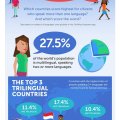
Seven Languages in Seven Days! That sure sounds familiar. Four years ago I taught a four-day course that was somewhat misleadingly called Five Languages in Five Days (check out the link), so my eye was certainly caught by a description… Read More ›

There might be a typo in that title! Did you catch it? No, this not just a bunch of squiggles! It’s a real word, written in a real script, in a real language—one that is spoken by four million real… Read More ›

My former Weston High School student, Julia Métraux, has published a really interesting article about the reclaiming of Yiddish by queer Jews. As you know, I’ve written several posts that mention Yiddish, most recently one about the Yiddish-German connection. You… Read More ›
Perhaps for some odd reason you have never looked at a modern edition of an ancient or medieval text—whether in Latin, Greek, Hebrew, Old Norse, Sanskrit, Old High German, or whatever. In that case, it’s not too late to start!… Read More ›

