After all, Spanish is simpler than Latin, isn’t it? And modern English is surely simpler than old English. So that proves it. Or does it? Well, no. There are at least two things that are wrong with the common claim… Read More ›
Linguistics

A strange book cover puzzle
You recognize this book, right? A glance at the cover makes it obvious what book this is. But then… You look again and start asking yourself why it says Garri, not Harry. And that reminds you of two things: It… Read More ›
A “more perfect language”?
The Foers know what they’re talking about. You are probably familiar with Jonathan Safran Foer, and perhaps you know his brother Franklin Foer. But this post is about his other brother, Joshua Foer—in particular about a long non-fiction piece he… Read More ›

Irises
Irises. Perhaps, like some people I know, you don’t believe that that’s how the plural of iris is spelled. Perhaps you prefer the original spelling, ἰριδες. In any case, our ἰριδες are doing quite well, considering that it’s only mid-May.
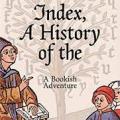
Index, A History of the
You’re in for a treat—if you read this will book with full focus and close attention. The title of this post is also the title of the book. Right away, you notice its form, and you realize that author Dennis… Read More ›

A quiz: why can’t you read this?
Yes, I know you can read this, namely this blog post. The question is why can’t you read the passage below this paragraph. OK, OK, so it’s not in English, but that’s not the point. It’s from the Greek Old… Read More ›
Are contractions bad? In a way, but not for the obvious reason.
Oh my. Edwin Battistella begins a recent post in the OUP blog with this sentence: A few years ago, a student dropped a linguistics course I was teaching because the textbook used contractions. Yikes, can that be true? Apparently so…. Read More ›
Go hang a salami, I’m a lasagna hog.
Say what? If you don’t get it, just read it backwards! Yes, it’s a palindrome. And I just watched a movie about people who write palindromes: The Palindromists. “How nerdy can you get!”, you exclaim. “And which syllable has the… Read More ›
Learning Ukrainian: progress report #5
The lessons are starting to become uninspired/uninspiring. My guess is that Duolingo had to rapidly hire some Ukrainian speakers and no one had the time to write thoughtful, well-vetted lessons. So we get sentence after sentence with only small variations… Read More ›
Learning to read aloud fluidly in a new alphabet
As you know, I’ve been learning Ukrainian through Duolingo for about six weeks now. I have good news and bad news. The good news is that I am progressing. The bad news is that Duolingo doesn’t give me enough context!… Read More ›
What are we? “Jewish Americans” or “American Jews”?
The excellent PBS documentary from 2008, The Jewish Americans, is an in-depth account of three hundred years of American Jews. I have no idea why it took me 14 years to watch it! The mix of presenters includes public figures,… Read More ›
Learning Ukrainian: progress report #4
As you see from the title, this is the fourth of my weekly reports on my progress in learning Ukrainian through Duolingo. After today, I will switch to writing intermittent reports: i.e., whenever I have enough new to write about,… Read More ›
Learning Ukrainian: progress report #3
We have, as they say, good news and bad news. The good news is that my Ukrainian lessons are progressing well in their third week. The bad news—speaking as a teacher—is that pedagogically speaking the lessons are not designed nearly… Read More ›
Learning Ukrainian: progress report #2
It’s now one week since my first progress report. Apparently I’ve learned 95 new words in the past seven days. Duolingo previously said that I had learned 105 words in the first three days. Eek, am I slowing down? Aside… Read More ›
In praise of Omniglot
What, you may ask, is Omniglot? Well, the name gives it away (or hints at it, at least). Latin omni- ‘all, every’ followed by Greek glot- ‘tongue, language’ tells you that it has something to do with every language. And… Read More ›
Learning Ukrainian: progress report #1
Today is Exelauno Day, so named because “Exelauno” means “march forth” in ancient Greek. My Greek 2 teacher used to celebrate it because he had gone to Roxbury Latin School, where it is (or at least was) an official holiday…. Read More ›
German is hereby completed!
Well, OK, not exactly. I don’t even know what it would mean for German to be completed. It’s just that I have completed everything that Duolingo can offer me in German. And that is far from “everything.” Basically, I have… Read More ›
What lies on the other side of the River Styx?
Who knows? You’ll have to read the engaging novel Across the River Styx to find out. You might have a rough voyage, but the reading won’t be rough. Looking at the cover image below, you’ll see what this novel is:… Read More ›
You’re wondering what a “book word” might be. Right?
Here are some examples of book words: awry, bedraggled, biopic, cache, calliope, Greenwich, Hermione, misled. So, what do these words (and a few dozen more) all have in common? The answer is that they all are (or might be) words… Read More ›
If ontogeny really recapitulated phylogeny…
If you need the full explanation, visit explainXKCD.
 Learning Strategies