Here are answers to the puzzle from a few days ago, the one that asked you to identify 13 different languages: 1. French 2. Italian 3. Spanish 4. Portuguese 5. Ladino 6. Galician 7. Aragonese 8. Catalan 9. Occitan 10…. Read More ›

Here are answers to the puzzle from a few days ago, the one that asked you to identify 13 different languages: 1. French 2. Italian 3. Spanish 4. Portuguese 5. Ladino 6. Galician 7. Aragonese 8. Catalan 9. Occitan 10…. Read More ›
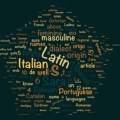
A sentence is shown below in 13 different languages, which are obviously related but how many can you identify? Some of them are going to be easier than the languages on the Mars bar the other day. I can give a… Read More ›
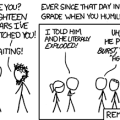
Kory Stamper’s typically excellent article in The Cut is literally the best thing ever. What did you think of that sentence? Did the figurative/emphatic use of literally bug you? If so — or even if not — you should read “The 300-Year… Read More ›

The image below shows the trilingual wrapper of a candy bar abandoned by a film crew that had been shooting in South Boston near Dorchester. Can you figure out what the three languages are? Hint #1: I can’t speak any… Read More ›


Every language changes, as I occasionally have to remind my non-linguist friends when they complain about this or that. Some languages change more than others — English, for example, has changed much more quickly and more dramatically than, say, Icelandic… Read More ›
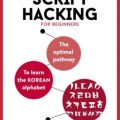
No. “Script hacking” does not refer to writing programs in JavaScript — or even AppleScript. In this context it refers to exploring and playing with a non-Roman alphabet. At this point, Teach Yourself Library has published five books in the Script… Read More ›

Did you miss the Barbra Trybe estate sale? This document looks to me like a Munich “fishing license for foreigners” from a century ago. My German is very rusty these days, so can anyone figure it out better than I… Read More ›

Occasionally the review is more informative and entertaining than the book itself. Consider a review of The 25 Rules of Grammar by Joseph Piercy. In case you’re confused, it’s the book that’s by Joseph Piercy; the review is by Joe… Read More ›
Most Americans, I’m sure, hold an erroneous belief about languages in Scotland. Here are some common beliefs on this subject: Some Americans think that all Scots speak Gaelic. Not true. (And more on this one below.) Some — most, probably… Read More ›
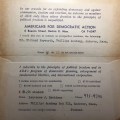
So I‘m sitting next to one of my bookshelves this morning, and I happen to notice an old French paperback. I say to myself “I wonder if I can still read French.” (The answer is “not so well.”) I pick… Read More ›
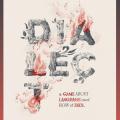
Check out Dialect, a tabletop role-playing game based on linguistics! I’ve never tried it myself, mind you. But it certainly looks intriguing — for the right set of players. The question is, who has the time and the interest to… Read More ›

All published reviewers of Wordslut are women — at least as far as I can tell. But men should read it too. Aside from gender issues, you may be wondering whether this is a technical linguistics book or a popularization. Its… Read More ›

How do you interpret this sign? Does it mean… (A) handicapped parking on Election Day, with a 30-minute limit (and parking allowed for everyone on other days)? (B) handicapped parking all the time, usually with indefinite time but with a… Read More ›
The best book of the year! Yes, I know that the year is only half over, but I’m still going to nominate Mary Norris’s Greek to Me as the best book of the year. Equal parts travelogue, memoir, mythology, and… Read More ›

What did I know about Virginia Woolf? Not much. I knew that she wrote about needing “a room of her own,” and that she had written something about a lighthouse, and I had long ago seen Edward Albee’s Who’s Afraid… Read More ›
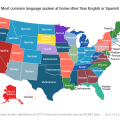
What’s the most commonly spoken language in your state? (We’ll exclude the two obvious ones, of course — English and Spanish.) This map shows the surprising answer, at least if we trust Business Insider: Absolutely fascinating, but I’m not completely… Read More ›

I just read a provocative essay by David Moser entitled “Why Chinese is so damn hard.” Is it really that hard? And are we talking about speaking Chinese or reading it? Hard compared to what? Hard for a foreigner or… Read More ›

One of the first things any article about sisu will tell you is that this Finnish word is untranslatable. (https://finland.fi/arts-culture/sisu-within-finnish-key-life-love-success/) ‘Sisu’ in Finnish means strength, perseverance in a task that for some may seem crazy to undertake, almost hopeless. (http://www.bbc.com/capital/story/20180502-sisu-the-finnish-art-of-inner-strength)… Read More ›
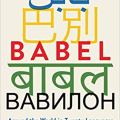
Read and enjoy this book! Don’t argue: just do it. You’ll learn a lot and will have fun along the way. As the subtitle to Babel — Around the World in Twenty Languages — suggests, Dutch linguist Gaston Dorren takes us… Read More ›

