If you think about the word cathedral—as one does—you imagine that it must have originally meant “cat chair,” since you know that hedra is ancient Greek for “chair.” Right? Well, not exactly. But now, at least, you want to read… Read More ›

If you think about the word cathedral—as one does—you imagine that it must have originally meant “cat chair,” since you know that hedra is ancient Greek for “chair.” Right? Well, not exactly. But now, at least, you want to read… Read More ›

We’ve all had this experience. You hear or read an unusual word that’s completely new to you—and then, a day or so later, you hear or read it again! Is it a coincidence? It just happened to me with the… Read More ›

Over 97% of Americans are either immigrants or descendants of immigrants—even if some so-called conservatives don’t want to admit it. But many of us who grew up with immigrant parents or grandparents are unable to speak or read the language(s)… Read More ›

This is my not-quite-annual “march forth” post wishing everyone a happy Exelauno Day. In case you’ve forgotten, here is my post from a year ago, which happens to be mostly about learning Ukrainian (!) but opens with remarks about Exelauno… Read More ›
Let’s suppose your unimaginative instructor gave you this task: add up all the whole numbers from 1 through 42. You have, of course, several options: Or, if your language of choice is APL, you could simply write a one-line program… Read More ›
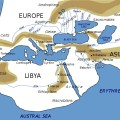
Can you name three or four ancient world historians? I don’t mean modern writers who study the history of the ancient world; I mean writers who lived in the ancient world and wrote about the history of their time and… Read More ›
Six days ago I gave you a linguistics quiz that Lynne Murphy designed for the holiday season. The quiz is reprinted below so you don’t have to flip back and forth. Here are the answers, with annotations in some cases:… Read More ›
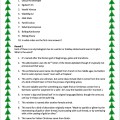
Four days ago I gave you a linguistics quiz that Lynne Murphy designed for the holiday season. The quiz is reprinted below so you don’t have to flip back and forth. Full answers will be posted on Tuesday. For the… Read More ›

Apparently I’m late jumping on the bandwagon. Everywhere I look, someone else is trying out ChatGPT and commenting on it. This app is supposed to respond like a real human being, given any particular prompt you may type. So I… Read More ›
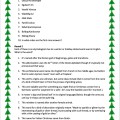
You have been selected to take this language/linguistics quiz written by an American-British linguist. No fair asking Dr. Google or anyone else for help! Hints will be posted on Sunday, answers on Tuesday.
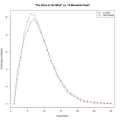
You can believe actual data. We’ll call that Door #1. Or you can believe your general “impression.” We’ll call that Door #2. Or you can believe what other people tell you—the “common knowledge” that everyone “knows.” We’ll call that Door… Read More ›
And here is the full solution to the puzzle about telling time in Estonian. First the answers, in case you want to check your answers before following the link to the full solution: Challenge 1a. 9:25b. 11:45c. 2:30d. 3:15e. 6:35… Read More ›
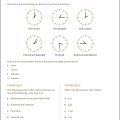
Alex Bellos, on Atlas Obscura, has written a fine linguistics/math puzzle about telling time in Estonian. No knowledge of Estonian is required (in fact, it would spoil the puzzle), nor is any advanced knowledge of math or linguistics expected. Here… Read More ›
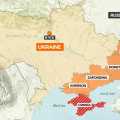
A great article in The Spectator teaches us the history of language in Ukraine in the context of the rest of the history of the country. Author Norman Davies is remarkably thorough and thankfully straightforward, teaching us a lot in… Read More ›
Prescriptivists and right-wingers were all outraged back in Shakespeare’s day, when progressives and descriptivists started using the plural pronoun “you” to address a single person. It would be the death of the English language! How dare they try to change… Read More ›

If you look cooly at the maps of common mispellings, paying attention to the miniscule details, it won’t take you a millenium to recognize that many of these words are frequently mispelled. The lists in those maps may or may… Read More ›

Even in my circles, Latin and Greek are not exactly common topics of conversation. Friends and relatives are surprised whenever I read something in Ancient Greek—or even in Latin—for fun. OK, I’m weird. But you probably knew that already. What… Read More ›
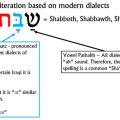
Shabbos (stress on first syllable, second vowel “o,” ends in “s”) or shabbat (stress on last syllable, second vowel “a,” ends in “t”)? Why can’t we agree on how to pronounce Hebrew? How about beth, bet, or beis? Shibboleth or… Read More ›
You do have an accent—even if you think you’re speaking unaccented English. And you do speak a dialect—even if you think you’re speaking “ standard English.” In an amazing three-part must-see video, dialect coach Erik Singer takes us through a… Read More ›

Just over a couple of decades ago, the whole country was buzzing about something called Ebonics, now known as AAVE (African-American Vernacular English). You may or may not remember this, depending on your age and ethnicity. Go watch this short… Read More ›
 Learning Strategies