Apparently I am the only person in the world who has trouble with emojis. I find, at least as they are usually used, that they are too small for me to pick out the details. Most of the facial expressions… Read More ›
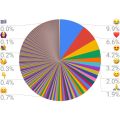
Apparently I am the only person in the world who has trouble with emojis. I find, at least as they are usually used, that they are too small for me to pick out the details. Most of the facial expressions… Read More ›
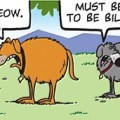
Catherine Savini has an interesting piece in a recent issue of Inside Higher Ed. Although it’s aimed at college professors, it applies equally well to secondary educators. The issue is a familiar one: how to respond to students who don’t speak or… Read More ›

Quick: who said the sentence in the title of this post? That’s right, it’s your favorite Member of Congress, Marjorie Taylor Greene! Linguist Mark Liberman, incidentally a former classmate of mine, observes that Steve Silberman nominated the above sentence of Greene’s to… Read More ›

Hands up if you know who the Sami are without looking it up! Hmm… only three of you. I could have asked whether you can figure out where the stunning movie Sami Blood was filmed, relying on the title alone. Again,… Read More ›

When is it OK for a stranger to call you by your first name? This is a more complicated question than it first appears to be. I’ve been listening to a lot of podcasts with guests during the pandemic, and… Read More ›
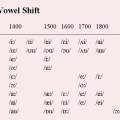
Don’t read the title to this post. It’s a lie. Simon Roper has not actually discovered recordings from 1340. Or even 1400. But his 18-minute video is still very much worth watching. When I say “watching,” I mean more than… Read More ›

I’ve only once cited the first-rate Humans Who Read Grammars. Yes, only once. But it’s not my fault! I would love to cite them more, but the authors post too rarely. What’s the matter with you guys? Do you have a life… Read More ›

Where do you go to find the answer to a question about science fiction? Google? Wikipedia? The New York Times? All of those are plausible answers, but it would sure be convenient to have everything you want to know in… Read More ›
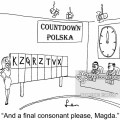
“Polish is a very difficult language,” says the typical American who doesn’t live in the Dorchester neighborhood known as the Polish Triangle. That’s primarily because they want to buy a vowel when they see so many consonants. They look at… Read More ›

What a refreshing antidote to that horrid book of unscientific advice that I won’t name here. You know which horrid book I’m talking about: that undeservedly famous guide by Strunk and White. The antidote is the little book Twelve Gifts for Writers by… Read More ›

You know those “Common Bonds” puzzles, a.k.a. “What do these three have in common?” Look at the title to this post. The first two items are easy—nerds have a lot in common with Harry Potter—but Burmese translations? Take a look… Read More ›

“Every language changes.” This is a standard response when peevers complain about “bad” English. In fact, it’s appropriate response #1. As you know, peevers file regular grievances about singular “they,” about new words, new meanings, the word “irregardless,” slang, the willingness… Read More ›
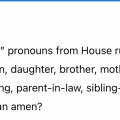
Leading Republican congressman Jim Jordan is well-known as an expert on “pronouns“:
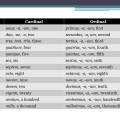
So you’ve never heard of the name Quartus? I’m not surprised. Almost no one, after all, is named Quartus. But why not? Peter Gainsford answers the question—and other questions as well, most of which you didn’t even know you had…. Read More ›
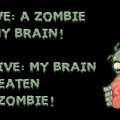
The bill was signed by the president. The bill remained on the president’s desk for five days. Mistakes were made. All three of those sentences are in the passive voice, right? Actually, wrong. Only the first and third are. So… Read More ›
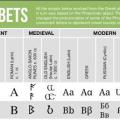
Is there such a thing as the Hebrew alphabet? How about the Japanese alphabet? Or the Hindi? “Of course,” you reply. “At least I know there’s a Hebrew alphabet. It has letters like מ, which means ‘m,’ and it’s written… Read More ›

I just wish this book had been published 20 years ago! Alex Bellos has compiled an amazing collection of language-related puzzles in the Language Lover’s Puzzle Book, released a few month ago in the UK and more recently elsewhere in the English-speaking… Read More ›
For some obscure reason (I don’t really understand why) I’ve just never been into D&D or any other role-playing games. And yet… …and yet I keep running into various aspects of RPGs (role-playing games) that definitely interest me. Unsurprisingly these… Read More ›

It was 1968. Fully automated translation was just around the corner. Or so I learned in a computer science class. Of course there was officially no such discipline at the time, so it was actually an applied math class, but… Read More ›
Take a word that’s written in one alphabet (Cyrillic, say). Now spell it in another alphabet (Roman, say). Why? Well, Russian is written in Cyrillic, but it’s often necessary to write Russian words in English, using the familiar Roman alphabet…. Read More ›
 Learning Strategies