Just over a year ago, I published a blog post in which I added Talk the Talk to my short list of favorite linguistics podcasts. The bad news is that Talk the Talk is no more. The good news is… Read More ›

Just over a year ago, I published a blog post in which I added Talk the Talk to my short list of favorite linguistics podcasts. The bad news is that Talk the Talk is no more. The good news is… Read More ›

How many Americans know that Morocco is in Africa? Probably not very many. I’m guessing 4%. And half of those know Morocco’s location only because they’ve seen the world’s best movie (Casablanca, of course) and have paid attention to the geography…. Read More ›

Once upon a time you were probably learning Spanish, French, Italian, or Latin. (If you weren’t, keep reading anyway.) You probably had to learn hundreds of verb forms in your chosen language, if it was one of those. Not so if… Read More ›
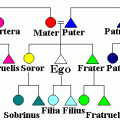
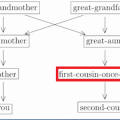
Fill in the blank in the title — but no need to do it in Latin, as in the figure. English will be fine. What? You can’t do it? You say English doesn’t have a word for that relationship? You… Read More ›

What are your favorite poems? Is an epic poem too long to count as an answer to this question? I hope not — but I’ll play it safe and split the difference. My favorite pair of poems are… drumroll, please…… Read More ›
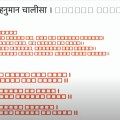
“So many boxes to be found on the internet!” I’m guessing that you’ve seen something like this, perhaps in Facebook, Twitter, email, etc. Right? And perhaps you know that the boxes represent characters in fonts that you don’t have on… Read More ›
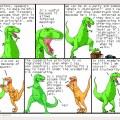
“Can you pass the salt?” “Yes, I can.” And then of course he doesn’t. This is an easy example of violating the hidden rules of conversation as described by philosopher Paul Grice. The rules are commonly known as the Gricean… Read More ›

The French Academy has been shocked — shocked, I tell you — that some people have actually been saying “le Covid 19” instead of “la Covid 19”. The underlying issue is that maladie (“illness”) is feminine, but virus is masculine. So the French, in… Read More ›
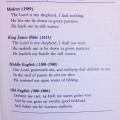
Do you still speak Shakespearean English? Or, to go further back, Chaucerian English? No, of course you don’t. So why do so many people think that in 2020 we should speak the way people spoke in 1950, that 2020 speech… Read More ›
One day in the early ’80s, when very few people had even heard of the internet, I was reading an online discussion about computer programming projects in Logo. A certain angry participant got very upset at a contributor from Montreal… Read More ›

I wish I had created this. “This” is a series of a dozen extremely short animated videos describing the entire worldwide history of writing and writing systems — in under an hour total time for all the bite-size videos combined…. Read More ›

You will want to read a longish poem just published by my favorite Canadian linguist, James Harbeck. Before then, note what he has to say about words: Words are delicious and intoxicating. They do much more than just denote; they have appearance,… Read More ›

How do you combine linguistics, the movies, New York, and politics? Just check out this fascinating article from the New York Times! The article includes several great clips with audio and video from a wide range of New Yorkers. I… Read More ›

How do you pronounce “Seán Mac an tSíthigh”? Don’t ask me. I’ve been attempting to learn something about the Irish language, but the spelling and pronunciation are daunting, as I suggested in a post I wrote a couple of months… Read More ›

“They speak Arabic in Iran, Pakistan, and Xinjiang, right?” No, that’s wrong. “OK, what I meant is that they write Farsi, Urdu, and Uyghur in the Arabic script. That’s right, isn’t it?” That’s closer, but still not right. We need… Read More ›

I’ve known lots of non-native speakers of English who speak English fluently. Some of these are friends of mine, some are friends of my family, some were my classmates, some are my students. But is there any pattern to the… Read More ›
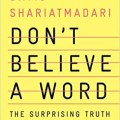
Do you want to get a serious look at linguistics from an author who writes clearly for a general audience? If so, read David Shariatmadari’s Don’t Believe a Word: The Surprising Truth about Language. When I say it’s for a general audience, you… Read More ›

Surely you want to read the Harry Potter books in their new Yiddish translation, don’t you? “But I don’t read Yiddish!” you exclaim. That’s admittedly a handicap. But you can make some progress by sounding out the Hebrew letters (with… Read More ›
Don’t take words for granted. But do take Words for Granted. What can that possibly mean? Words for Granted is a pop-linguistics “podcast about how words change over time,” in their own words. They’re going strong at 83 episodes so… Read More ›

Apparently there’s one four-letter word that “does great damage to way too many people.” No, not that word. This one is “like.” So says Edward Good, the developer of grammar.com; check out the excellent (and very short) article on this… Read More ›
 Learning Strategies