Most Americans, I’m sure, hold an erroneous belief about languages in Scotland. Here are some common beliefs on this subject: Some Americans think that all Scots speak Gaelic. Not true. (And more on this one below.) Some — most, probably… Read More ›
Linguistics
Found in a book… and some linguistic remarks
So I‘m sitting next to one of my bookshelves this morning, and I happen to notice an old French paperback. I say to myself “I wonder if I can still read French.” (The answer is “not so well.”) I pick… Read More ›
A language game
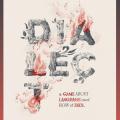
Check out Dialect, a tabletop role-playing game based on linguistics! I’ve never tried it myself, mind you. But it certainly looks intriguing — for the right set of players. The question is, who has the time and the interest to… Read More ›
Wordslut
All published reviewers of Wordslut are women — at least as far as I can tell. But men should read it too. Aside from gender issues, you may be wondering whether this is a technical linguistics book or a popularization. Its… Read More ›
Interpreting a sign
How do you interpret this sign? Does it mean… (A) handicapped parking on Election Day, with a 30-minute limit (and parking allowed for everyone on other days)? (B) handicapped parking all the time, usually with indefinite time but with a… Read More ›
Greek to Me
The best book of the year! Yes, I know that the year is only half over, but I’m still going to nominate Mary Norris’s Greek to Me as the best book of the year. Equal parts travelogue, memoir, mythology, and… Read More ›
Virginia Woolf: “On Not Knowing Greek”
What did I know about Virginia Woolf? Not much. I knew that she wrote about needing “a room of her own,” and that she had written something about a lighthouse, and I had long ago seen Edward Albee’s Who’s Afraid… Read More ›
The most commonly spoken language in your state
What’s the most commonly spoken language in your state? (We’ll exclude the two obvious ones, of course — English and Spanish.) This map shows the surprising answer, at least if we trust Business Insider: Absolutely fascinating, but I’m not completely… Read More ›
“Why Chinese is so damn hard”
I just read a provocative essay by David Moser entitled “Why Chinese is so damn hard.” Is it really that hard? And are we talking about speaking Chinese or reading it? Hard compared to what? Hard for a foreigner or… Read More ›
Untranslatable words
One of the first things any article about sisu will tell you is that this Finnish word is untranslatable. (https://finland.fi/arts-culture/sisu-within-finnish-key-life-love-success/) ‘Sisu’ in Finnish means strength, perseverance in a task that for some may seem crazy to undertake, almost hopeless. (http://www.bbc.com/capital/story/20180502-sisu-the-finnish-art-of-inner-strength)… Read More ›
Babel
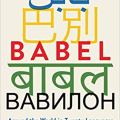
Read and enjoy this book! Don’t argue: just do it. You’ll learn a lot and will have fun along the way. As the subtitle to Babel — Around the World in Twenty Languages — suggests, Dutch linguist Gaston Dorren takes us… Read More ›
What kind of lies does he-who-shall-not-be-named tell? Bald-faced or bold-faced?
“I’m starving! I haven’t been fed in days!” says William. “Just look at that face!” That’s a typical cat lie. But is it a bald-faced lie? Or even a bold-faced lie? When I was a kid, interested in both language… Read More ›
Tones, Hmong, sounds, and spelling
The Hmong are a well-known ethnic group, right? Well, not exactly. They’re probably not well-known to you, unless you are particularly interested in southeast Asia or happen to live in Minneapolis or Fresno, even though there are about 15 million… Read More ›
We all love long words.
We all love impressively long words, don’t we? We especially love words from languages like German and Turkish, which are known for harboring such beasts —like Donaudampfschiffahrtsgesellschaftskapitän and muvaffakiyetsizleştiricileştiriveremeyebileceklerimizdenmişsinizcesine. But those are not particularly natural words in German and Turkish respectively,… Read More ›
Why do Americans think that Asians mix up R and L?
Speaking of Asia, why do so many Americans think that Asians mix up R and L? (Asians? East Asians? Chinese and Japanese? How far does this stereotype go?) Before we answer this question, I need to point out a more… Read More ›
Linguistics podcasts updated
A year and a half ago — forever, in tech terms — I reviewed four linguistics podcasts: Lingthusiasm, The World in Words, Very Bad Words, and Lexicon Valley. Since then, the second and third of these have unfortunately ceased to… Read More ›
A 5% discount (or is it a five percent discount? or a 5 percent discount? or a five % discount?)
Like many of you, I grew up learning the traditional rules about when to write out numbers in words and when to use numerals. Most professionals continue to use these rules today, as in the following awkward paragraph from Talking… Read More ›
Friends of Dorothy
In my naive youth, I had no idea what a “friend of Dorothy” was; in-group descriptors, after all, are always known to members of the in group (and allies) long before they are known to the general public. “Friend of… Read More ›
The top universities for linguistics?
Are these really the top universities for linguistics? That’s what the QS World University Rankings by Subject says. I’ve been skeptical of lists like this as I watched high-school ratings over two decades from publications like Boston Magazine and U.S. News, paying special attention… Read More ›
Bay State Model Railroad Museum Spring Model Train Show
Wow! Look at that title: a noun phrase consisting of nine consecutive nouns! Maybe the show should be called Buchtstaatsmodelleisenbahnmuseumsfrühlingsmodellzugshow. On second thought, maybe not. OK, enough fooling around with German. Let’s get back to the show itself, which was… Read More ›