If you enjoy the English language, but aren’t a professional linguist, you will definitely enjoy this book. If you are sometimes, often, or (yikes) always a prescriptivist, but have an open mind, you’ll not only enjoy it but will also learn something from it. It will cause you to think, and perhaps you’ll change your mind a bit.
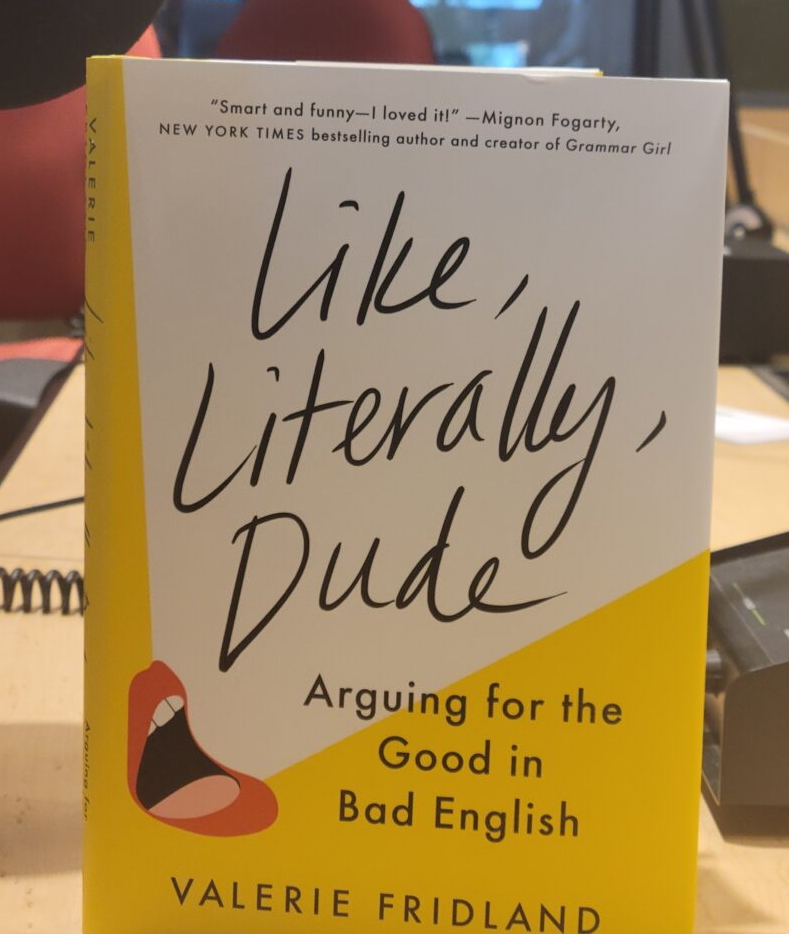
You don’t want to pursue Like, Literally, Dude as bedtime reading. Not because it’s scary (it isn’t), but because you have to be alert when you read it or else most of the wit will pass you by. So be sure you’re wide awake before reading. As the title suggests, you’ll learn why the current uses of words like like, literally, and dude are older than you think. You’ll learn the complicated history of singular they (which goes back hundreds of years!) and why people who criticize women’s voices need to know that “there is nothing inherently gentle, dumb, sultry, or unprofessional about someone because of how they sound,” in author Valerie Fridland’s words. And then you can sit back and admire that Oxford comma.
I like to read popularizations of linguistics, partly to inform myself about ways to talk about language successfully with non-linguists, and partly because I enjoy them. There is nothing sloppy or oversimplified about this book, despite my warning that you need to be well-caffeinated when you read it. Nor, on the other hand, is there anything professorial about it, thanks to the author’s agent, Becky Sweren, who “taught me to write less as a professor and more as a story-teller,” again in the author’s words. Wide-ranging, informative, and appropriately opinionated, Like, Literally, Dude is definitely worth reading.
Categories: Books, Linguistics
 Learning Strategies