Now we know who our next VP is going to be. Well… maybe not.. but let’s look back at what I wrote on August 8, 2017, and subsequently on August 28, 2022:
Post of 8/8/2017:
What an irritating book!
Even if you haven’t read Hillbilly Elegy by J.D. Vance, you’ve probably at least heard of it, as it made quite a splash when it came out last year and stayed on the best-seller list for weeks and weeks.
So…“irritating,” I say. For a while I wasn’t even sure whether I would want to finish it.
Then for a while I thought that it was just nuanced and I must have been missing the point.
Finally, I thought it was merely confused, and the point was all too clear.
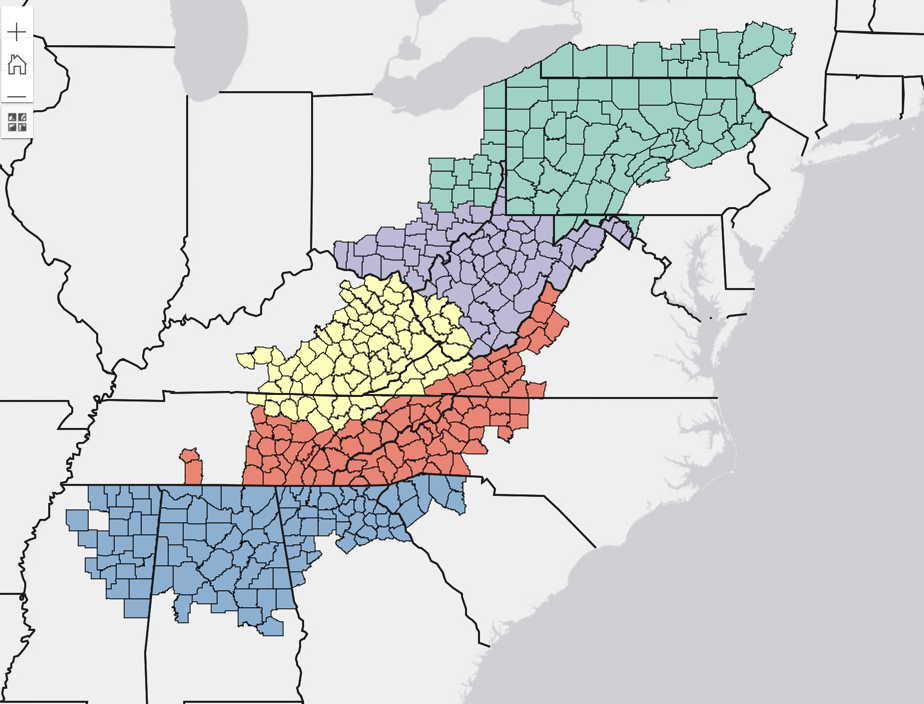
The subtitle is A Memoir of a Family and Culture in Crisis. In case you haven’t heard, this is a memoir of a lawyer who grew up in eastern Kentucky and southern Ohio (see map), then escaped the culture of Appalachia by attending and graduating from Ohio State, and finally went on to Yale Law School and became a practicing attorney. Vance makes the legitimate point that the general public is aware of the problem of poverty among non-whites in the inner city but most people don’t realize the problem of poverty among whites in rural areas, especially Appalachia.
OK. Fine.
But then consider the following paragraph from the middle of the book, where Vance writes about the tile warehouse where he held his first job:
The problems that I saw at the tile warehouse run far deeper than macroeconomic trend and policy. Too many young men immune to hard work… A young man with every reason to work… carelessly tossing aside a good job with excellent health insurance. More troublingly, when it was all over, he thought something had been done to him. There is a lack of agency here — a feeling that you have little control over your life and a willingness to blame everyone but yourself.
Blaming the victim? Sure looks like it. Yes, “a willingness to blame everyone but yourself” is distressingly adolescent behavior for adults, but Vance is supposedly expressing love for the same family and friends whom he disparages like this. That’s why I was torn between “nuanced” and “confused” to describe his approach.
Then we get this bit of commentary:
To many analysts, terms like “welfare queen” conjure unfair images of the lazy black mom living on the dole… I have known many welfare queens; some were my neighbors, and all were white.
OK, I agree that the Reaganesqure image “of the lazy black mom living on the dole” is unfair, and it’s legitimate for Vance to point out that most “welfare queens” are white (if the term means anything). But the tone of that last sentence is just so offensive.
So maybe it’s not his neighbors’ fault. Maybe they don’t have the advantages that Vance’s classmates at Yale Law had. Describing his interviews for post-law-school jobs, he hits the nail on the head:
Virtually everyone who plays by the rules fails. That week of interviews showed me that successful people are playing an entirely different game. They don’t flood the job market with résumés, hoping that some employer will grace them with an interview. They network. They email a friend of a friend to make sure their name gets the look it deserves. They have their uncles call old college buddies… They have parents tell them how to dress, what to say, and whom to schmooze.
Even though I never went to law school, I know exactly what he means. The whole paragraph is pretty close to describing my experience when I entered the job market. It’s unfair. At this point I say to myself “Vance is being surprisingly insightful for a Republican.” And a Republican he is, as he makes very clear.
So then we’re back to blaming the victim:
This was my world: a world of truly irrational behavior. We spend our way into the poorhouse. We buy giant TVs and iPads. Our children wear nice clothes thanks to high-interest credit cards and payday loans. We purchase homes we don’t need, refinance them for more spending money, and declare bankruptcy, often leaving them full of garbage in our wake. Thrift is inimical to our being. We spend to pretend we’re upper-class…
Our homes are a chaotic mess. We scream and yell at each other like we’re spectators at a football game. At least one member of the family uses drugs — sometimes the father, sometimes the mother, sometimes both. At especially stressful times, we’ll hit and punch each other, all in front of the rest of the family, including young children…
We don’t study as children, and we don’t make our kids study when we’re parents… We choose not to work when we should be looking for jobs. Sometimes we’ll get a job, but it won’t last. We’ll get fired for tardiness, or for stealing merchandise and selling it on eBay, or for having a customer complain about the smell of alcohol on our breath, or for taking five 30-minute restore breaks per shift.
Wow! Not only back to blaming the victim, but so much self-hatred, so much tarring the whole region with a broad brush. I won’t even get into Vance’s views on religion, or his explanations of why Appalachia contained the highest amount of Trump voters in the nation. How do I make sense of this mishmash? Do I now have a deeper understanding of the problems of rural America? Will you, if you read Hillbilly Elegy? (Closing remark: I assume that Vance is trying to reclaim the slur “hillbilly” as so many other groups have reclaimed terms that were used as slurs, like “queer.”)
Post of 8/28/2022:
Let’s suppose Hillbilly Elegy were a novel, i.e. fiction. And suppose its author, J.D. Vance, were an honest writer. Then Hillbilly Elegy would turn into Lady Chevy.

Of course Hillbilly Elegy is actually a memoir, not a novel. And J.D. Vance is actually a Republican, not an honest writer. That’s why we’re talking in the subjunctive. But I digress…
Lady Chevy, by John Woods, is a bleak but effective novel. As in the Vance memoir, its protagonist grows up in the Appalachian portion of Ohio and is unusual because of being destined for college. The descriptions of the region are consistent between the two books but differ in their surface topics: mostly drugs in the Vance memoir, mostly fracking in the Woods novel. In both cases, though, the real theme is hopelessness and what do do about it. Both books take the major character from an apparently hopeless childhood in rural Appalachian Ohio to attendance at a prestigious university.
If you read only one, which book should you read? You can certainly get a picture of life in Appalachia by reading Hillbilly Elegy—a highly biased picture, but a picture nevertheless. The trouble is that that book really is not worth reading, for reasons I cited in my review from five years ago. So just read my review instead; it will tell you all you need to know, with the added bonus of getting my unbiased (IMHO) take on the man who will probably be the next U.S. senator from Ohio.
You can also get a picture of life in Appalachia by reading Lady Chevy. As with any work of fiction in which setting plays a strong role, you’re never quite sure how accurate the portrayal is. But since the author grew up in the region he portrays, and since he seems reliable, I’m inclined to trust the picture. I have absolutely no idea what his politics might be; Woods (unlike Vance) does not wear his politics on his sleeve. But you can get some idea from a remark by the protagonist, the first-person narrator who dreams of becoming a veterinarian and volunteers at the local veterinary clinic even while still in high school:
To this day we help those who look like us, act like us, value what we value. My family says this is the strength of small-town America, an intuitive truth of all worthwhile nations.
There’s a lot to learn from those two short sentences.
You can also learn a lot from a description of the class structure of the town as revealed in the local high school. The narrator writes about her civics teacher, Mr. Packard:
Packard wrangled them all in to speak with high-school kids about honorable professions, the responsibilities that kept a town running…. I was bitter. People like my parents never got asked to come speak. My dad helped put the roofs on most of their homes…. But these people in their suits and ties and slacks possessed something higher, almost unattainable, a superior value determined by their positions in life, ones they had earned through college, through gates denied to people like me.
I can tell you that the characters and the plot of this dark novel are complex and feel real. The difficulty with Lady Chevy is that I can’t tell you the truth about the protagonist and the most major of the “minor” characters, as that would involve spoilers. So you should read it yourself, but not during a week when you need to be cheered up.
Categories: Uncategorized
 Learning Strategies