Capitalization matters. Occasionally. The title of this post can be read as written, with an upper-case “A,” or it can be read as spoken aloud, with a lower-case “a” (not that case choice can easily be heard in speech, though intonation can sometimes communicate it). This post is based on both of these readings.
You probably are acquainted with Ancestry, a reasonably well-known tool for researching and displaying family connections through DNA and other means. Six years ago I showed their analysis of my ancestry, which was quite accurate; I will repeat their map here:
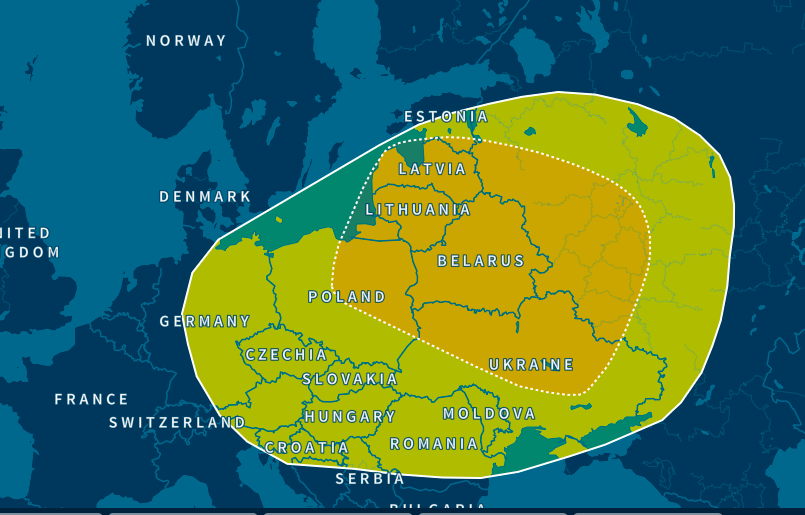
Note that the region in orange (the “most probable” region) centers firmly on modern Belarus — and I now know that that’s indeed where the whole maternal side of my family tree was originally located. Score ten points for Ancestry!
But here are two conclusions which surprised me:
- “You don’t descend from all your ancestors.” This sounds paradoxical, even contradictory. One would naively think that of course you do! By definition, you claim, you descend from all your ancestors! But simple math shows that that’s not possible; watch this excellent video to see why. Although no higher math is required, you may need to watch the video more than once, since the reasoning is rather intricate.
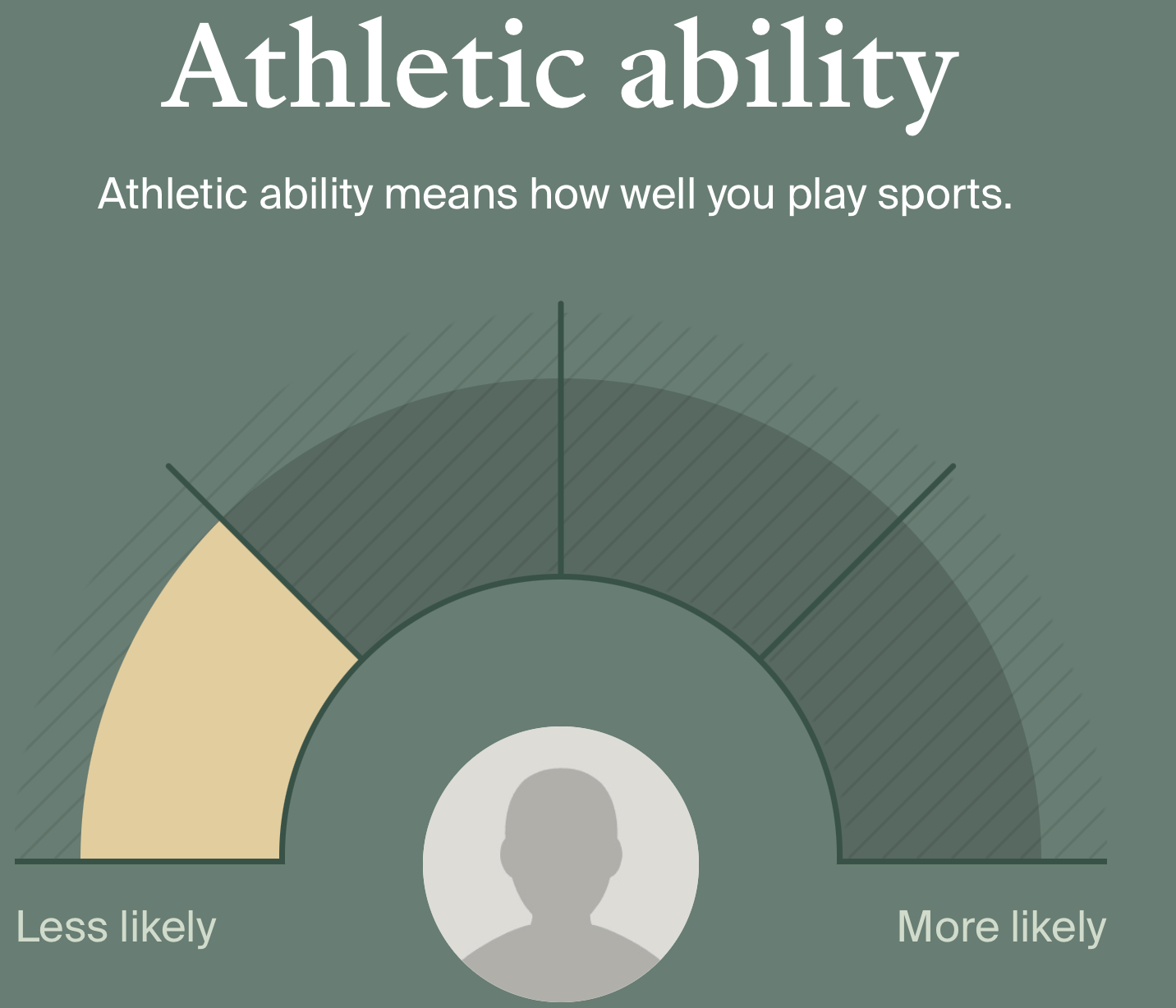
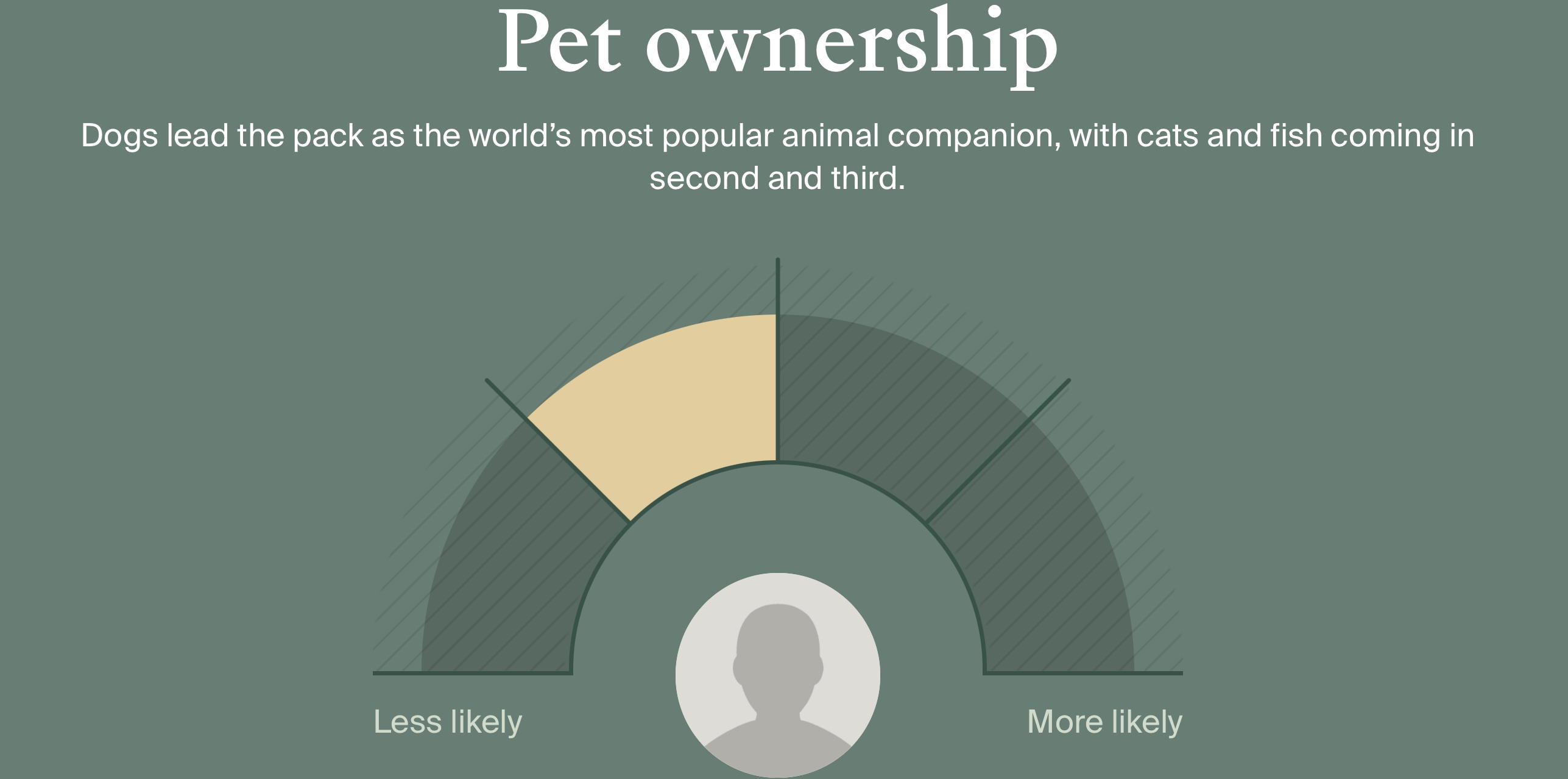
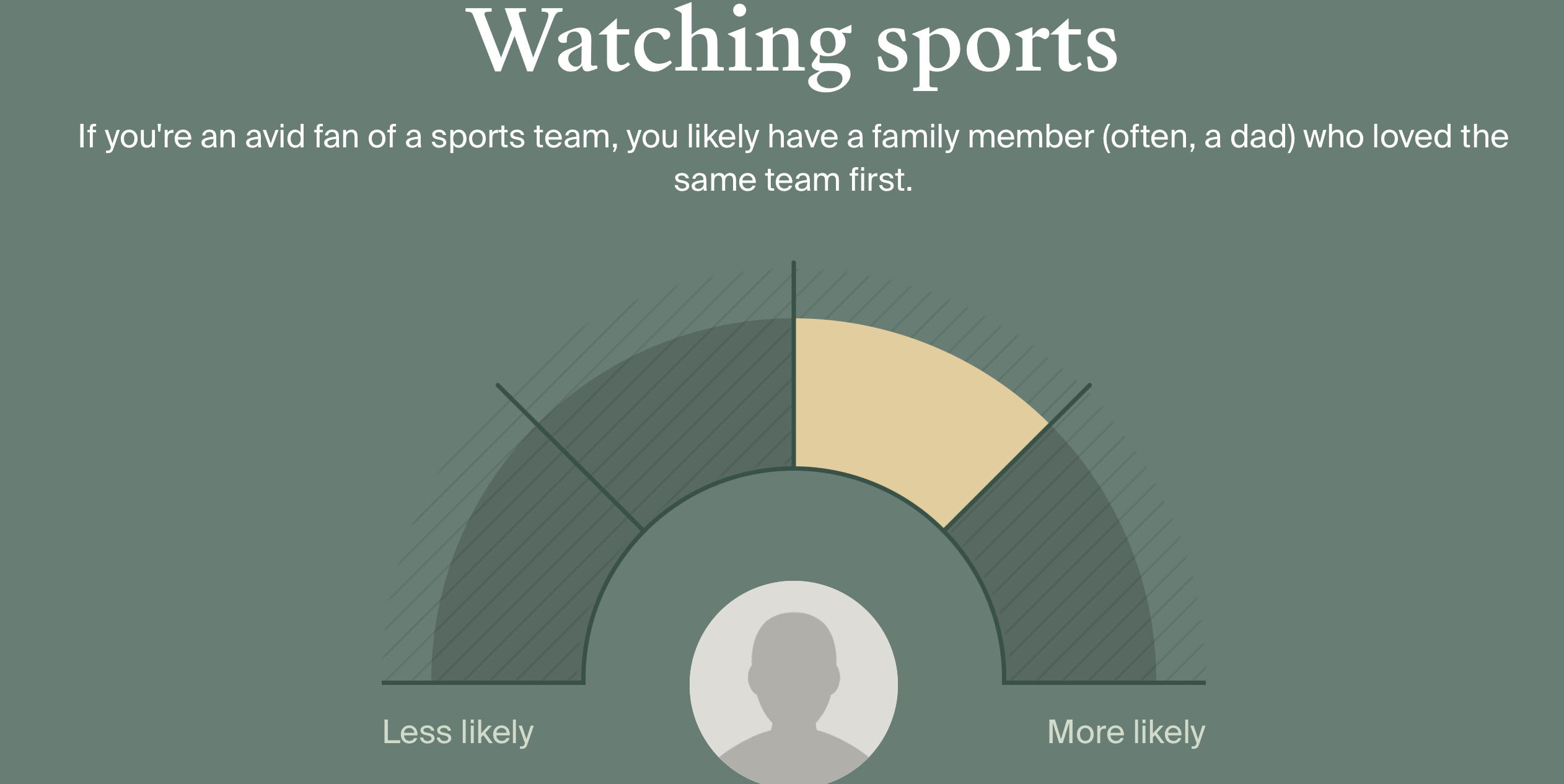
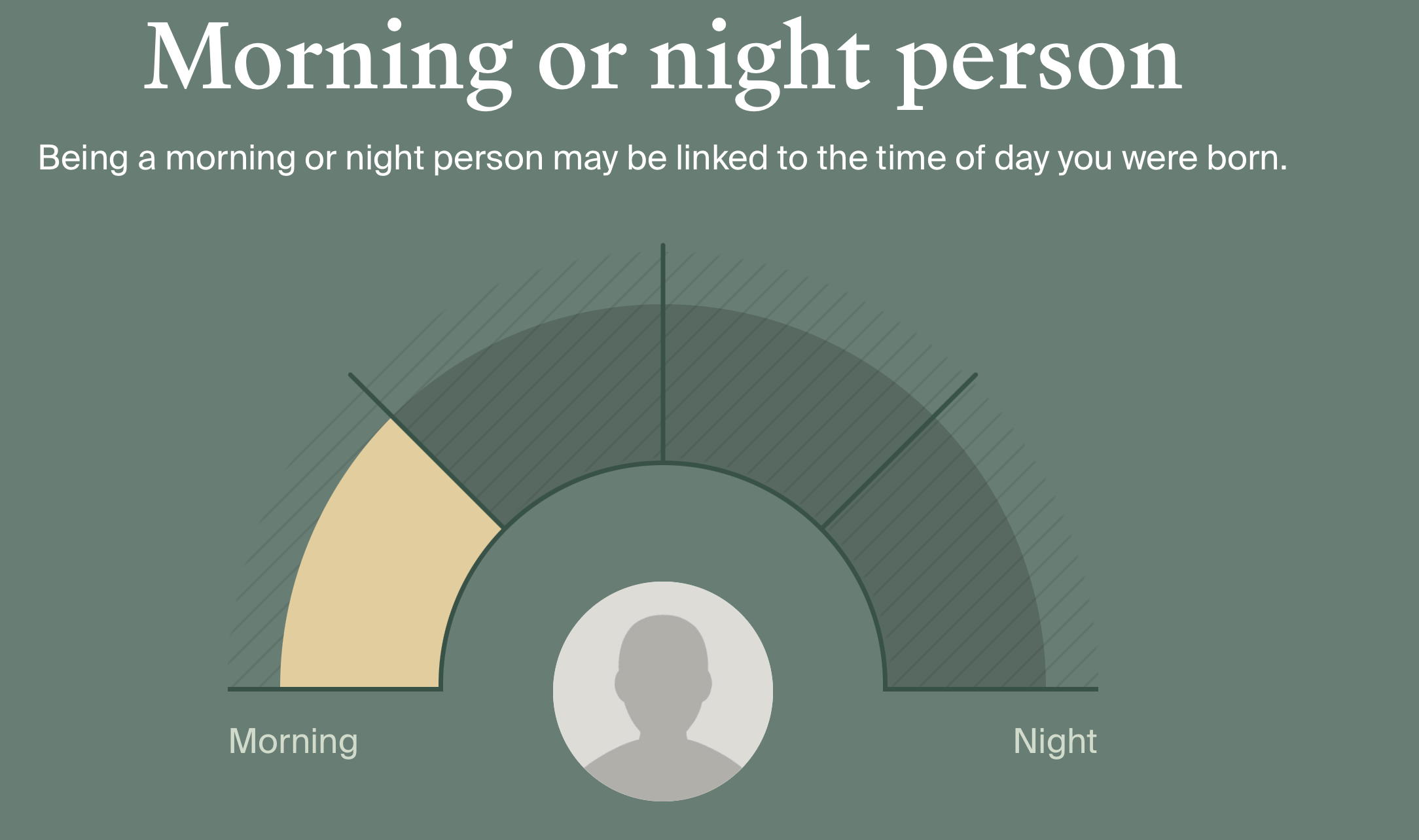
- And then we move from simple math to some questionable conclusions. Ancestry claims that they can tell what traits I am likely to have, based on my DNA. They warn us not to over-interpret their analysis (see long quote at the end of this post). Nevertheless, let’s look at four examples of traits and see how believable they are: athletic ability, pets, interest in watching sports, and being a morning or night person. I have quoted Ancestry’s analysis of how likely I am to have each trait in the four boxes above and below.
And here is their generic caveat:
Think of your trait results as a peek inside your DNA, rather than as a definitive prediction about your traits. If your trait result says you have curly hair, but your hair is straight, the markers we looked at aren’t “wrong,” they just don’t tell the whole story.
Most traits are influenced by many genes—some of which we don’t even know about yet.
Environmental factors can affect your traits, too. Your set of genes is called your genotype, and how those genes are expressed in your traits is called your phenotype.
Your phenotype results come from a combination of the DNA we know about, DNA we don’t yet know about, and your environment. As science progresses, more of your trait predictions may line up with your DNA, but they will never all align. Your genes are just a starting point for who you could eventually become.
Categories: Life, Math, Teaching & Learning
 Learning Strategies