Have you been fortunate enough to have studied ancient Greek theater (either in the original or in English translation)? You know which playwrights I mean — Aeschylus, Sophocles, Euripides, Aristophanes.
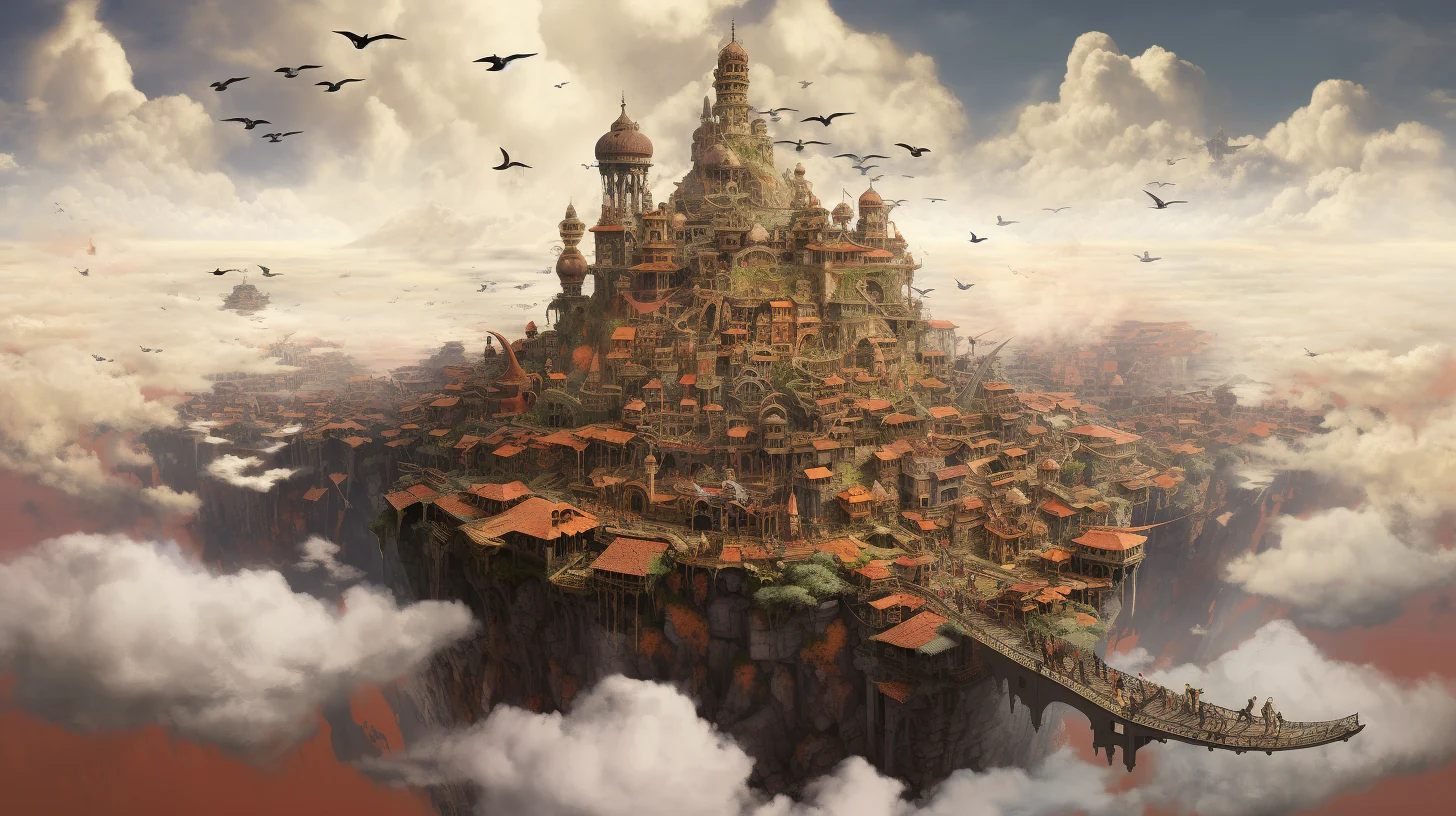
If those are all Greek to you, just keep reading. If you know what I’m talking about, also keep reading. This review is about an English-language novel, so no knowledge of ancient Greek is required here. You don’t even need to know that “Cloud Cuckoo Land” is merely a translation of “Νεφελοκοκκυγία,” a word coined by Aristophanes in his comedy, The Birds.
I certainly have been fortunate in regard to both the Greek and the English texts, as several of my Greek and English classes in both high school and college (in the ’60s) included plays by all four of the playwrights mentioned in the first paragraph above. Some of my classmates unaccountably found these boring; I found them fascinating. Obviously Anthony Doerr did so as well, as he was inspired to write the novel Cloud Cuckoo Land, which is the subject of this review. At a mere 575 pages, it is not what you might call light reading, but it more than repays the time you put into reading it. In fact, when I was about three quarters of the way through, I returned the library copy I was reading and bought a copy of the paperback edition so that I might own it forever. The line that did it for me was an actual Greek quotation, “Ὠ ξένε, ὅστις εἷ, ἄνοιξον, ἵνα μάθῃς ἃ θαυμάζεις,” which of course means “Oh stranger, whoever you are, open this up in order to learn things that will astonish you.”
In a recent interview, author Doerr said that this book is a “literary-sci-fi-mystery-young-adult-historical-morality novel,” which I think captures it exactly. Although it has five protagonists, spread out over a period of 2400 years, the reader somehow is never confused, as it is always clear when each section of the book is taking place and who the characters are. Doerr says in the interview:
I tried to cram all of my preoccupations and interests and anxieties over the past seven years into this novel — pandemics, mega-cannons, the fragility of memory, the preservation of texts, the power of ancient myths, middle age and the Middle Ages, questions about the coming power of AI, my fears about the twin crises of a warming planet and biodiversity loss, and lots of other stuff too.
If that doesn’t appeal to you, why doesn’t it?
Of course you may be wondering what ties all this together. It’s definitely one story, not five different ones, and it’s all because of a no-longer-extant ancient Greek manuscript. “I do hope,” writes Doerr, “readers come away from this book with a renewed sense of our interconnections with people in other times and places, and with all the species with which we share this dazzling planet.” Unusually, he explains his writing process: “This novel took me seven years to write and the interweaving of all the various strands took most of those seven years. I drew lots of maps and outlines, and would spread out my little chapters on the carpet and try arranging them in different configurations, usually with the pieces of Aethon’s story running down the centre.”
Perhaps the theme of the novel lies in a sentence spoken by Zeno (one of the protagonists, a modern one, not the ancient philosopher): “Sometimes the things we think are lost are only hidden, waiting to be rediscovered.” For a much deeper analysis, read this one — but only after you’ve read the novel.
Categories: Books
 Learning Strategies