So I keep seeing references to posts on Reddit…and I always ignore them. But then I said to myself, “Why not give Reddit a chance? What’s there to lose?” That led me to sign up for a few subreddits in the areas of linguistics and model railroading. The first thing I saw was this question:
It is sometimes said that Modern Hebrew is a conlang. To what extent can this said to be true?
How close to Biblical Hebrew is it anyway? Were there people who tried to ensure that it stayed as closely as possible to what we assume biblical hebrew was like and if yes, how influential were they? Can modern hebrew be said to be a direct descendant of biblical hebrew or is it more akin to the relationship between English and English-based creoles?
Very interesting replies at the link above, including comparisons to Irish, Manx, and Cornish — and then on to Maori, Hawaiian, and Al-Sayyid Bedouin Sign Language. Also a peculiar comment from one redditor: “I have an easier time understanding Chaucer than understanding biblical Hebrew, though they’re on a similar level of difficulty for me.” Explanation? And then there’s the odd (and clearly wrong) comment from a native Hebrew speaker: “Modern Hebrew is nothing like Biblical Hebrew.”
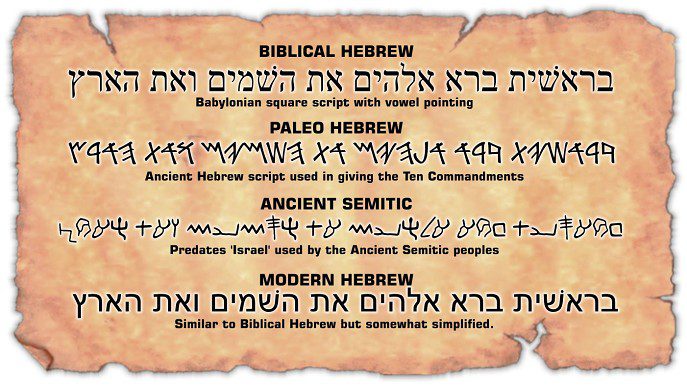
Of course I don’t know how reliable that site is. The first example, after all, clams to have vowel pointing, although it clearly doesn’t.
Well, I’ll keep at it…
Categories: Linguistics
 Learning Strategies