Alas, my quick trip to Assembly Row in Somerville didn’t end well. The idea was for me to go see The Odyssey in IMAX comfort, but…
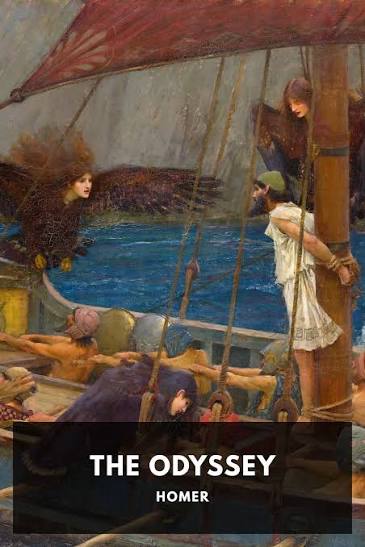
First of all, it turned out that I wasn’t feeling well. I had a reserved-seat ticket for the 10:15 a.m. “matinee,” so I went anyway. I had assumed that I could get up to go to the bathroom however often without disturbing anyone, since my reserved seat was shown as being on a wide crosswise aisle, but the online map didn’t show the barrier right in front of my knees! Definitely not WYSIWYG. Fortunately the theatre was only a third full, so I was able to switch to an unobstructed seat; problem solved.
Second, everything was much too loud! The endless ads and previews didn’t help my feeling unwell, especially since they were all much too loud and most were violent. Did I mention that they were too loud? And even the feature was too loud.
Third, I should have followed my own advice: never read the book before seeing the movie! If I had seen the movie first, it wouldn’t have clashed with my visual (mental) image of the setting and the characters. As it was, everything in the movie just felt wrong! So for all these reasons I left after the first hour.
Before I go on, let me point out that I have been a devoted reader of The Odyssey on many occasions over a period of 63 years now! (I even taught it one semester, when I was drafted to teach a section of Classical Literature.) So maybe I can’t be fair. In particular, when I was in 11th grade taking Greek 3, I read a small amount of The Odyssey and a much larger amount of The Iliad — both in the original Greek, of course — and both epics became part of me for life. For context, just relish the first two lines of The Odyssey:
ἄνδρα μοι ἔννεπε, μοῦσα, πολύτροπον, ὃς μάλα πολλὰ
πλάγχθη, ἐπεὶ Τροίης ἱερὸν πτολίεθρον ἔπερσεν
I hope that stirs you as it did me… but wait, maybe it can’t because you’ve never studied ancient Greek. That’s your loss, and you should please remedy it immediately.
Anyway, there are four good ways to experience The Odyssey, with different advantages and disadvantages:
- Ideally, read it (or listen to it) in the original Greek. The advantage is that you get the authentic original text; the disadvantage is that you have to know Greek.
- The more obvious method is to read (or listen to) a good English translation, of which there are many choices to select from. Ideally, read two — simultaneously. The advantage is that you can make sense of it; the disadvantage is that there is no such thing as an accurate translation. Traduttore traditore, as they say.
- The third choice is what we’re looking at right now: watch the movie version. The less said about that, the better, unless you can manage to see it before reading (or listening to) the text.
- Finally, you can experience it indirectly by reading a derivative text, such as James Joyce’s Ulysses. Of course that’s altogether something else.
Speaking of derivative texts, I highly recommend Tennyson’s poem “Ulysses.” Whenever I am asked for my favorite poem — which happened remarkably often during my teaching career — I would say The Odyssey if a long poem is an appropriate answer, or “Ulysses” if a short one is. The latter is only 70 lines long, compared to the 12,110 lines in the original epic! Since it’s so short, I might as well quote it here in its entirety, which gives me an excuse to re-read it for the nth time:
It little profits that an idle king,
By this still hearth, among these barren crags,
Match’d with an aged wife, I mete and dole
Unequal laws unto a savage race,
That hoard, and sleep, and feed, and know not me.
I cannot rest from travel: I will drink
Life to the lees: All times I have enjoy’d
Greatly, have suffer’d greatly, both with those
That loved me, and alone, on shore, and when
Thro’ scudding drifts the rainy Hyades
Vext the dim sea: I am become a name;
For always roaming with a hungry heart
Much have I seen and known; cities of men
And manners, climates, councils, governments,
Myself not least, but honour’d of them all;
And drunk delight of battle with my peers,
Far on the ringing plains of windy Troy.
I am a part of all that I have met;
Yet all experience is an arch wherethro’
Gleams that untravell’d world whose margin fades
For ever and forever when I move.
How dull it is to pause, to make an end,
To rust unburnish’d, not to shine in use!
As tho’ to breathe were life! Life piled on life
Were all too little, and of one to me
Little remains: but every hour is saved
From that eternal silence, something more,
A bringer of new things; and vile it were
For some three suns to store and hoard myself,
And this gray spirit yearning in desire
To follow knowledge like a sinking star,
Beyond the utmost bound of human thought.This is my son, mine own Telemachus,
To whom I leave the sceptre and the isle,—
Well-loved of me, discerning to fulfil his labour, by slow prudence to make mild
A rugged people, and thro’ soft degrees
Subdue them to the useful and the good.
Most blameless is he, centred in the sphere
Of common duties, decent not to fail
In offices of tenderness, and pay
Meet adoration to my household gods,
When I am gone. He works his work, I mine.There lies the port; the vessel puffs her sail:
There gloom the dark, broad seas. My mariners,
Souls that have toil’d, and wrought, and thought with me—
That ever with a frolic welcome took
The thunder and the sunshine, and opposed
Free hearts, free foreheads—you and I are old;
Old age hath yet his honour and his toil;
Death closes all: but something ere the end,
Some work of noble note, may yet be done,
Not unbecoming men that strove with Gods.
The lights begin to twinkle from the rocks:
The long day wanes: the slow moon climbs: the deep
Moans round with many voices. Come, my friends,
‘T is not too late to seek a newer world.
Push off, and sitting well in order smite
The sounding furrows; for my purpose holds
To sail beyond the sunset, and the baths
Of all the western stars, until I die.It may be that the gulfs will wash us down:
It may be we shall touch the Happy Isles,
And see the great Achilles, whom we knew.
Tho’ much is taken, much abides; and tho’
We are not now that strength which in old days
Moved earth and heaven, that which we are, we are;
One equal temper of heroic hearts,
Made weak by time and fate, but strong in will
To strive, to seek, to find, and not to yield.
Categories: Books, Linguistics, Movies & (occasionally) TV

